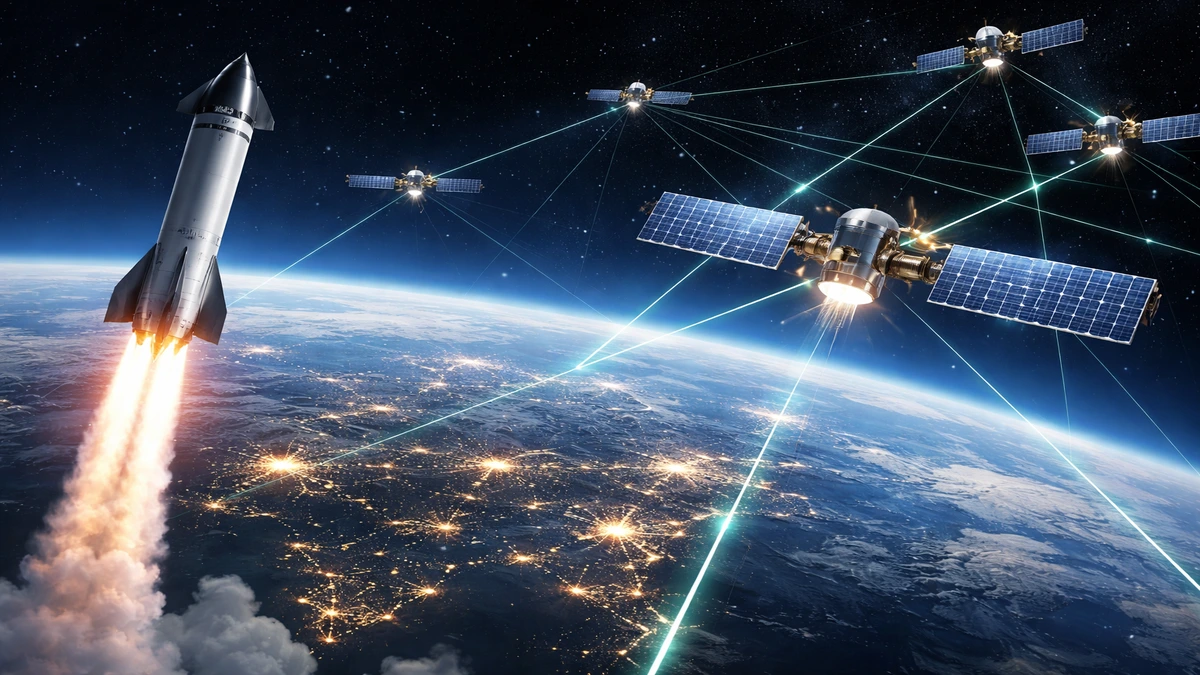
Anthropic’s billion-dollar expansion with Google Cloud unlocks access to one million TPUs, marking a new era in enterprise AI infrastructure where scale, efficiency, and sustainability converge.
The current scenario of Artificial Intelligence marks a scenario where foundational model providers are redefining the boundaries of computational scale to meet enterprise demands. Anthropic announced a landmark expansion of its partnership with Google Cloud, securing access to up to one million Tensor Processing Units (TPUs) in a multi-year agreement valued at tens of billions of dollars. This commitment, set to deliver more than a gigawatt of AI compute capacity by 2026, underscores the intensifying capital requirements for sustaining production-grade AI deployments. As enterprises increasingly integrate AI into core operations, this development offers a lens into the practical considerations shaping infrastructure decisions, from cost efficiency to operational resilience.
Anthropic’s growth trajectory provides context for the necessity of such investments. The company now supports over 300,000 business customers worldwide, with large accounts—those generating more than $100,000 in annual run-rate revenue—expanding nearly sevenfold in the past year. This acceleration reflects Claude’s transition from exploratory tool to mission-critical asset in sectors like finance, healthcare, and manufacturing. For instance, organizations such as Novo Nordisk and Palo Alto Networks have deployed Claude to automate complex workflows, including data analysis and threat detection, highlighting the model’s reliability in high-stakes environments. With enterprise AI adoption reaching 78% globally in 2024—up from 55% the prior year—the pressure on providers to ensure consistent performance and availability has never been greater.
By committing to this scale, Anthropic positions itself to handle the computational intensity of next-generation Claude iterations, which require vast resources for training, fine-tuning, and inference.
The expansion, worth tens of billions of dollars, dramatically increases our compute resources as we push the boundaries of AI research and product development.
Read more: https://t.co/0Ar2abZwsd
— Anthropic (@AnthropicAI) October 23, 2025
A Diversified Approach to Compute Platforms
What sets this initiative apart is Anthropic’s deliberate multi-platform strategy, which spans Google’s TPUs, Amazon’s Trainium chips, and NVIDIA’s GPUs. This architecture avoids over-reliance on any single vendor, allowing the company to allocate workloads based on their unique profiles—training on high-throughput systems, inference on latency-optimized hardware, and research on versatile processors.
Amazon remains Anthropic’s primary training partner, bolstered by an $8 billion investment to date. Central to this relationship is Project Rainier, a distributed supercomputing cluster comprising hundreds of thousands of Trainium2 chips across multiple U.S. data centers that spans facilities connected via low-latency petabit-scale Elastic Fabric Adapter (EFA) networking, Rainier delivers five times the performance of Anthropic’s prior largest training setup, enabling the development of future Claude models with enhanced precision and speed.
NVIDIA’s GPUs round out the ecosystem, handling specialized tasks where flexibility in general-purpose computing proves advantageous. This model not only mitigates supply risks but also optimizes costs, as each platform excels in distinct phases of the AI lifecycle. For enterprises, this approach signals a broader truth: effective AI deployment demands architectural agility rather than monolithic commitments.
Balancing Performance, Efficiency, and Total Ownership Costs
At the heart of these choices lies a focus on efficiency, particularly as power and cooling constraints emerge as bottlenecks in large-scale AI operations. Ironwood’s vertical power delivery system enhances energy utilization compared to lateral designs in some GPU architectures, contributing to its edge in throughput per watt. Similarly, Trainium2’s memory bandwidth advantages align with Anthropic’s emphasis on reinforcement learning techniques, which are bandwidth-intensive for post-training refinements.
These technical merits translate into tangible economic benefits. Global investments in AI infrastructure reached $47.4 billion in the first half of 2024 alone, a 97% year-over-year increase, with hyperscalers like Amazon, Google, and Microsoft projecting over $300 billion in combined capital expenditures for 2025. For individual enterprises, annual allocations often span millions, underscoring the need to evaluate total cost of ownership (TCO)—encompassing not just hardware but facilities, energy, and maintenance.
Enterprise leaders must weigh these factors carefully. On-premises setups offer control but demand upfront capital for power infrastructure, while cloud models provide scalability at variable rates. Anthropic’s hybrid path demonstrates how blending platforms can yield 20-30% better TCO for mixed workloads, based on industry benchmarks for tensor-optimized accelerators. As AI shifts toward inference-heavy applications—projected to consume 80% of compute resources by 2026—efficiency gains from specialized chips like Ironwood become indispensable for maintaining margins.
Strategic Imperatives for Enterprise Leaders
This expansion carries direct lessons for chief technology officers and chief information officers charting AI roadmaps. First, capacity planning must prioritize provider diversification to buffer against disruptions, whether from supply shortages or regional outages. Anthropic’s multi-cloud setup proved resilient during a recent AWS incident, ensuring uninterrupted service. Organizations should audit their vendors’ roadmaps, including commitments like Google’s TPU scaling and Amazon’s Trainium3 previews, to align with long-term needs.
Second, safety and alignment warrant dedicated resources. Anthropic links this compute boost to enhanced testing and responsible deployment protocols, critical for regulated sectors. In financial services and healthcare, where compliance with standards like GDPR and HIPAA is mandatory, enterprises should probe providers’ investments in validation infrastructure during procurement.
Third, ecosystem integration remains key. As platforms like AWS Bedrock and Azure AI evolve, compatibility across clouds affects latency, data sovereignty, and certifications. Anthropic’s models, accessible via multiple gateways, exemplify how such interoperability streamlines adoption for global teams.
Finally, the competitive arena amplifies these dynamics. With rivals like OpenAI pursuing gigawatt-scale clusters such as Stargate, the pace of innovation accelerates model improvements but introduces pricing volatility. Active vendor management—through RFPs and performance clauses—can secure favorable terms amid this consolidation.
Toward Sustainable AI at Scale
Anthropic’s infrastructure pivot arrives amid heightened scrutiny of AI’s environmental footprint. Data centers now account for 2-3% of global electricity, with AI exacerbating this through dense compute demands. Yet, advancements like Ironwood’s 2x efficiency uplift and Rainier’s air-cooled, low-water designs point to mitigation strategies. Enterprises can contribute by favoring renewable-powered providers and optimizing workloads to reduce idle capacity.
In essence, this chapter in Anthropic’s journey illuminates a maturing AI ecosystem where scale meets pragmatism. By embracing diversified, efficient architectures, providers and users alike can unlock AI’s transformative potential without succumbing to its infrastructural burdens. For business leaders, the message is unequivocal: invest thoughtfully, integrate holistically, and adapt continuously. As 2026 unfolds with over a gigawatt of new capacity, the enterprises that thrive will be those that view infrastructure not as a cost center, but as the foundation of enduring innovation.