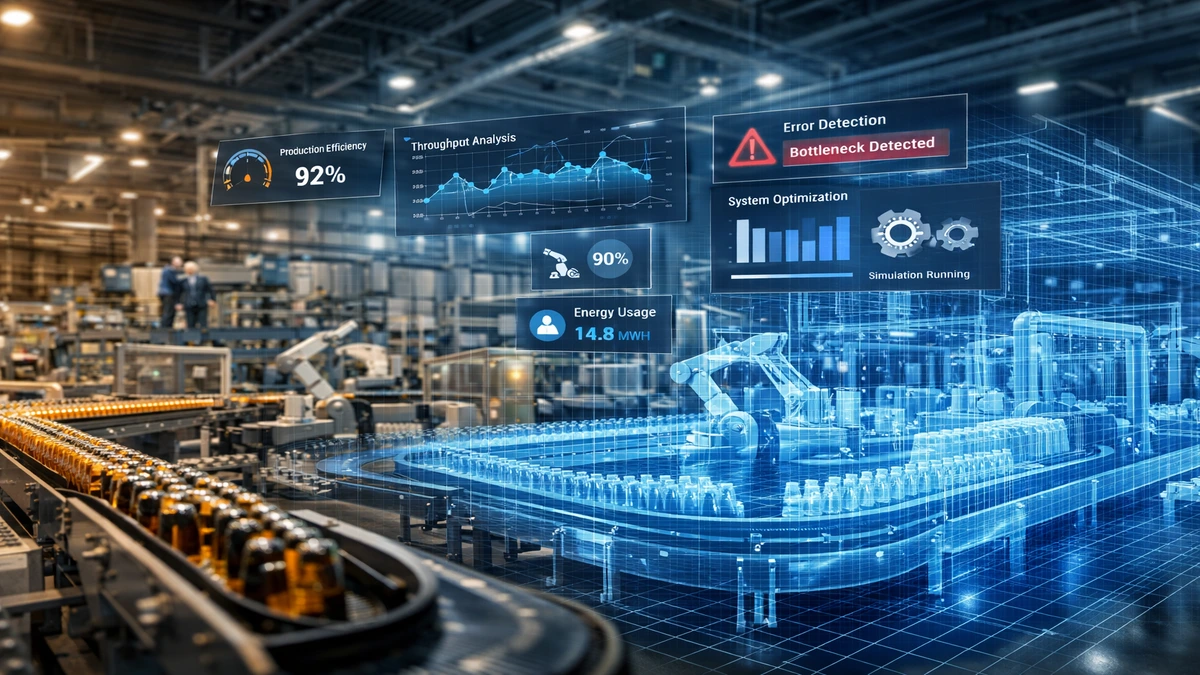
PepsiCo is using AI-powered digital twins to simulate factory changes in advance—reducing risk, speeding decisions, and reshaping how manufacturing upgrades are planned.
In the demanding world of large-scale consumer goods manufacturing, where every minute of production downtime translates to lost revenue and strained customer relationships, companies rarely chase technology for its own sake. The most valuable applications of artificial intelligence today are often the least visible – those that quietly reduce risk and accelerate decisions in the physical operations that keep the business running.
PepsiCo is making precisely this kind of pragmatic move. Through a multi-year collaboration with Siemens and NVIDIA, announced at the start of 2026, the company is deploying advanced simulation capabilities across parts of its manufacturing and warehousing network. The core idea is simple yet powerful: build precise virtual copies of real facilities so teams can test layouts, workflows, and upgrades in a risk-free digital environment long before any equipment is moved or any line is stopped.
What Digital Twins Bring to Manufacturing Operations
These virtual replicas, commonly referred to as digital twins, mirror physical assets with high fidelity. In a factory setting, they replicate machine placements, conveyor speeds, material handling paths, operator movements, and even energy consumption patterns. When artificial intelligence is layered on top, the system can evaluate thousands of possible configurations in hours rather than weeks, highlighting potential issues—bottlenecks, safety hazards, throughput drops—before they ever appear in reality.
PepsiCo’s early work has focused on converting selected facilities in the United States into detailed 3D digital models. Operations and engineering teams use these models to establish performance baselines, then simulate proposed changes such as new production line arrangements, packaging flow adjustments, or capacity expansions. The goal is not flashy automation but faster, more confident decision-making in an environment where mistakes are expensive and hard to reverse.
Reducing Risk and Delays in Factory Planning
Factory modifications in large consumer goods companies have historically followed a cautious, multi-stage path. Even modest changes—a rearranged workstation, a new piece of equipment, or an updated material flow—require extensive planning, cross-functional approvals, physical mock-ups, and staged trials on the live line. Each phase introduces delays that can cascade through the supply chain, affecting product availability and retailer commitments.
Virtual simulation offers a meaningful shortcut. By moving much of the validation and iteration into a digital space, teams can identify problems early, refine solutions collaboratively, and arrive at production-ready designs with far less physical disruption. Early pilots at PepsiCo have already demonstrated measurable progress: targeted lines showing throughput gains of approximately 20 percent, near-complete design validation before physical implementation, and estimated capital expenditure savings in the 10–15 percent range on select projects. Perhaps most telling, up to 90 percent of potential issues are now being surfaced in simulation rather than during costly real-world adjustments.
Keeping People at the Center of the Process
This is not a story of technology displacing workers. The value lies in empowering the people who already understand the facility best—engineers, operations leaders, and frontline teams. They retain full decision-making authority, but they now have richer, faster insights to inform those choices. A virtual model does not replace human judgment; it reduces the pressure of making decisions under the shadow of production halts or safety risks.
That human dimension matters deeply in manufacturing. Reliability, safety, and team morale depend on changes being introduced thoughtfully. When teams can experiment freely in a digital environment, see outcomes immediately, and iterate together, the entire process feels less burdensome and more collaborative.
How Enterprise AI is Actually Getting Used
PepsiCo’s approach reflects a maturing pattern across established industries. Early waves of enterprise AI often emphasized broad productivity tools—assistants for emails, reports, or general knowledge work. Many of those initiatives struggled to move beyond pilot status because they sat outside core workflows and failed to deliver clearly traceable business impact.
In contrast, the most successful deployments are increasingly narrow, embedded, and tied to specific operational friction points. When artificial intelligence becomes part of the planning and engineering rhythm rather than an add-on application, adoption accelerates. Measurable outcomes—shorter validation cycles, reduced downtime risk, unlocked capacity—become visible and defensible within existing processes.
Similar patterns are emerging elsewhere. In healthcare, for example, efforts to embed decision support directly into clinical workflows are gaining traction faster than standalone tools. The common thread is integration: technology that fits how work is already done tends to stick.
Why This Matters for Other Large Organizations
The constraints PepsiCo faces are far from unique. Manufacturers in food and beverage, chemicals, consumer packaged goods, and industrial sectors all contend with long planning horizons, high capital intensity, and relentless pressure to improve efficiency without disrupting output. Many already rely on simulation software; adding artificial intelligence simply increases the speed, scale, and intelligence of those models.
More important than the specific technology is what it signals about the next phase of enterprise adoption. Success increasingly hinges less on the sophistication of the underlying models and more on the quality of operational data, the strength of cross-functional ownership, and disciplined governance. A digital twin is only as effective as the real-time, accurate information flowing into it.
This kind of work also tends to stay under the radar. It lacks the viral demos and headline-grabbing announcements of consumer-facing AI, yet it has the potential to reshape how companies allocate capital, manage risk, and respond to changing demand.
What This Means for Enterprise Leaders
PepsiCo’s manufacturing initiative is a reminder that the factory floor remains one of the most promising arenas for artificial intelligence—not because it is fashionable, but because the costs of delay and error are concrete and immediate.
For leaders across industries, the lesson is less about copying a particular toolset and more about identifying the specific friction points where planning cycles drag, validation takes too long, or operational risk slows progress. Those are the places where carefully applied technology can deliver lasting advantage.
When artificial intelligence is treated as infrastructure—quietly supporting decisions rather than demanding new habits—it begins to change how organizations actually work. PepsiCo’s early steps suggest that, in the physical world of production, that change may already be underway.
Discover more from Poniak Times
Subscribe to get the latest posts sent to your email.