Production AI agents promise automation, reasoning, and productivity, but their hidden token loops can quickly turn into serious cost centers. This article explains why agentic workflows become expensive and how teams can reduce waste through context management, prompt caching, model routing, observability, and loop guardrails.
The excitement around autonomous AI agents often crashes against a sobering financial reality. What seems like a brilliant leap into productivity can quietly transform into a costly token-burning machine. Organizations deploying these systems frequently watch their budgets erode through repetitive loops, bloated contexts, repeated tool calls, and unchecked iterations. Yet it doesn’t have to be this way. With deliberate engineering and economic awareness, production AI agents can deliver outsized returns instead of mounting losses.
Production AI agents go far beyond simple prompt-response interactions. These systems plan, reason, invoke tools, observe outcomes, and iterate toward complex goals. Their power comes at a price: token economics that behave very differently from traditional chatbots. Mastering this hidden economy separates experimental demos from scalable, profit-generating systems.
Tokens are the basic units of text that language models process. A token can be a word, part of a word, a number, or even punctuation, depending on how the model breaks text down internally. Every prompt sent to the model and every answer generated by the model is counted in tokens. This matters because most AI model providers price usage based on the number of input and output tokens consumed. In a simple chatbot, this cost is usually easy to estimate.
In an AI agent, however, the same context, instructions, tool results, and previous reasoning steps may be passed back to the model again and again. That is why tokens are not just a technical detail; they are the economic fuel of production AI agents.
The Token Loop Trap: Understanding the Cost Explosion
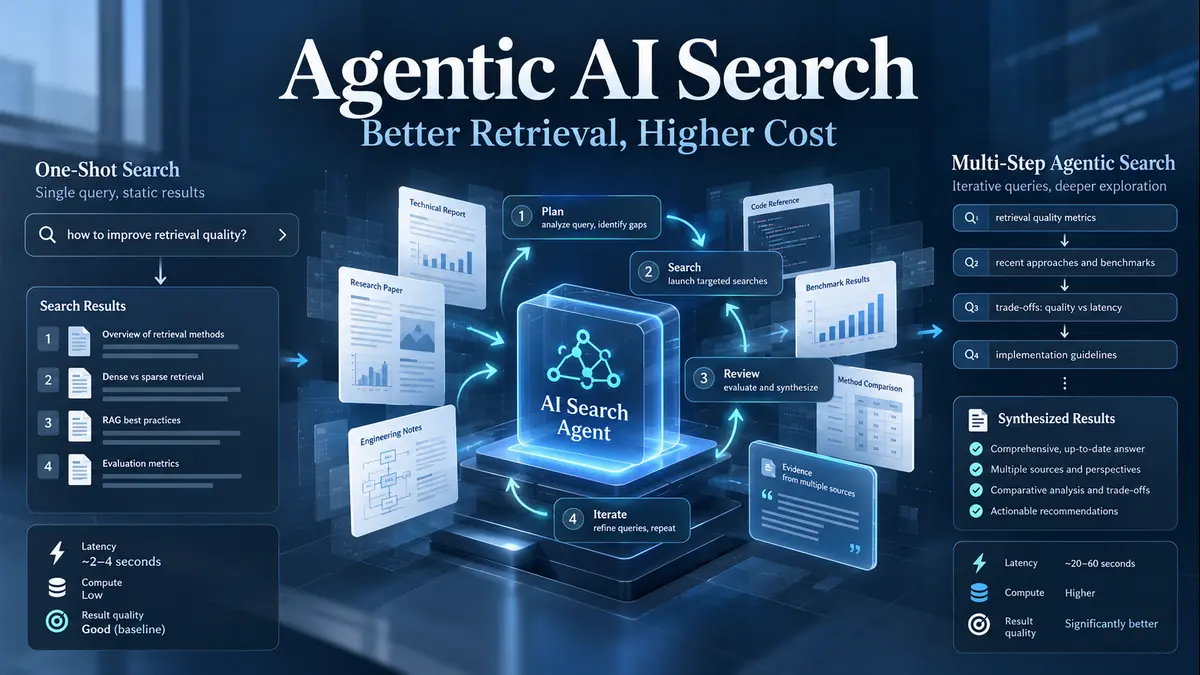
Traditional LLM calls are straightforward-one prompt, one completion. Agents, however, thrive in loops. Frameworks like ReAct, or Reason-Act-Observe, create repeated cycles where each step feeds the conversation history back into the model, along with new observations, tool outputs, intermediate reasoning, and system instructions.
This design can trigger steep cumulative cost growth. When each agent turn resends accumulated history, the per-turn prompt grows roughly linearly, while total token usage across the full workflow can grow close to quadratically with the number of iterations. Early turns might process a few hundred tokens. Later ones resend the expanding history, tool definitions, retrieved context, and prior observations. By the tenth iteration in a self-reflective loop, total consumption can balloon dramatically.
The SWE-bench Verified token-usage claims come from a 2026 arXiv study on agentic coding token consumption. The study shows that agentic coding workflows can consume far more tokens than ordinary code chat or code-reasoning tasks, with input tokens driving the bulk of total cost. It also found that repeated runs on the same task could vary by up to 30 times in total token usage, and that higher token spend did not always produce higher accuracy. That is the uncomfortable truth: more tokens do not automatically mean more intelligence. Sometimes, they simply mean more wandering.
Input tokens dominate the bill because history gets rebilled repeatedly. Output tokens still matter, especially when the model produces verbose reasoning or long tool explanations. But in many agentic workflows, the silent killer is the repeated replay of accumulated context. A software engineering agent might become expensive not because one model call is costly, but because dozens of calls keep dragging the same backpack through every step.
Beyond Tokens: The Full Spectrum of Hidden Costs
Token spend is merely the most visible leak. Latency compounds across loops, hurting user experience and creating opportunity costs. Tool calls rack up external API charges. Verbose observations bloat context windows, while large contexts carry heavier computational weight even when pricing appears simple.
Infrastructure adds another layer: monitoring systems, retries, logging, storage, evaluation pipelines, and human oversight all incur expenses. Unconstrained agents risk infinite loops or redundant actions, turning a modest task into a multi-dollar disaster. Deloitte has argued that tokens are becoming the true unit of cost in enterprise AI, and survey data cited by the firm suggests many companies already generate more than 10 billion tokens per month, with the share expecting to exceed 100 billion tokens per month projected to rise sharply by 2028.
That means token economics is no longer only an engineering concern. It is becoming a finance, governance, and operating model issue. Production AI agents now deserve the same discipline once reserved for cloud compute, database queries, and API calls.
Architecting Efficiency: Proven Strategies That Deliver Savings
Mastering Context and Hierarchical Design
Naive agents append everything to the prompt. Effective ones prune ruthlessly. Summarize history at key intervals, send only delta changes instead of full documents, and maintain state externally while feeding the model precisely what it needs.
The better pattern is to treat the context window as working memory, not as a dumping ground. Long-term facts should live in databases, vector stores, knowledge graphs, or structured state. The model should receive only the relevant slice required for the current decision.
Hierarchical systems shine here. A capable orchestrator coordinates cheaper specialist workers. The orchestrator handles planning, routing, and risk-sensitive decisions, while simpler sub-agents or deterministic tools handle routine steps. This pattern can reduce unnecessary frontier-model calls while preserving quality where it actually matters.
The Production Agent Cost Stack
A production agent is not one model call. It is a stack. A user request enters the system. A planner interprets the goal. A router selects a model or tool. Retrieval fetches context. The agent acts. A validator checks the result. If the output fails, the retry loop begins. Every layer consumes tokens, compute, time, or external API budget.
The mistake is optimizing only the prompt. The real leverage comes from optimizing the whole loop. Reduce unnecessary planning. Keep tool outputs concise. Store intermediate state outside the prompt. Validate early. Escalate only when confidence is low. The cheapest token is the one you never needed to generate.
Leveraging Prompt Caching and Intelligent Routing
Major providers now offer prompt caching for repeated prefixes such as system instructions, tool schemas, policy blocks, and common context. OpenAI says prompt caching can significantly reduce latency and input token costs, while recent research on long-horizon agentic tasks found that caching reduced API costs by 41–80% and improved time to first token by 13–31% across providers.
But caching only works well when prompts are structured carefully. Static content should stay at the beginning. Dynamic content should be placed later. Tool results that change every turn should not break the cache unnecessarily. In long-horizon workflows, this turns recurring context from a repeated expense into reusable infrastructure.
Dynamic model routing multiplies the benefit. Reserve powerful models for high-level planning, ambiguity, judgment, and final synthesis. Route routine classification, formatting, extraction, and verification steps to smaller models or deterministic code. This hybrid approach can cut spend without compromising user experience.
Implementing Loop Guardrails and Observability
Hard constraints matter: maximum iterations, per-task token budgets, timeout limits, and confidence-based early exits. Classify errors to distinguish retryable failures from terminal ones. Structured outputs and code-level tool routing reduce hallucinations that waste cycles.
Treat tokens like cloud compute resources. Track metrics such as tokens per workflow, cost per transaction, loop depth, cache-hit rate, retry rate, and model mix. Set governance policies that throttle, reroute, or escalate when budgets near limits. Real-time dashboards prevent surprises and enable continuous optimization.

Calculating True ROI: Moving Beyond Simple Math
Sustainable agent economics demands a holistic view. Costs include inference, tool calls, maintenance, monitoring, infrastructure, latency-driven opportunity costs, error remediation, and human review. Benefits include labor hours saved, reduced errors, faster cycle times, revenue uplift, improved customer satisfaction, and reusable automation assets.
Real deployments demonstrate strong returns when optimized, but ROI must be measured against complete cost, not just model pricing. A support agent that saves ten minutes per ticket may look attractive, but if it loops through expensive models five times for every simple query, the unit economics can quietly collapse. Conversely, a well-routed system that handles simple cases cheaply and escalates difficult ones intelligently can become a genuine profit driver.
Real-World Wins: Lessons from the Trenches
In logistics-style workflows, routing agents become expensive when they repeatedly inspect the same shipment, fleet, map, or constraint data on every loop. The economic fix is usually not a better prompt alone, but a better architecture: delta updates, cached route context, deterministic tool execution, and escalation only when uncertainty is high. Accuracy, exception handling, and cost control improve together when the loop is designed properly.
In software development, teams using advanced coding agents have discovered that frontier models vary widely in token efficiency. Recent research found that accuracy often peaks at intermediate token spend and saturates at higher spend. That matters. It means the most expensive run is not always the best run. Iteration caps, token-efficient model selection, concise tool outputs, and supervisor-style validation can preserve solve rates while reducing waste.
These examples highlight a crucial truth: the most expensive agents are not always the most capable. Controlled, economically aware designs consistently outperform raw intelligence alone.
The Road Ahead: Building Sustainable Agent Systems
Token prices continue falling as capabilities rise, but agent complexity and deployment scale grow even faster. Winners will embed economic discipline into every design decision rather than treating it as an afterthought.
Emerging practices include outcome-based pricing models, advanced context compression, cache-aware prompt design, and hybrid human-AI escalation paths. Self-optimizing agents that refine their own token usage represent an exciting frontier. Yet success still hinges on fundamentals: observability, guardrails, and relentless iteration based on production metrics.
Organizations that treat tokenomics as a first-class constraint build agents that scale profitably. They understand that intelligence without frugality leads to expensive experiments, while thoughtful efficiency unlocks compounding value.
The era of unchecked agent deployment is ending. Those who master the economics of production AI agents will turn potential cost centers into powerful competitive advantages. Start measuring today, optimize relentlessly, and watch your agents justify every token spent.
Discover more from Poniak Times
Subscribe to get the latest posts sent to your email.