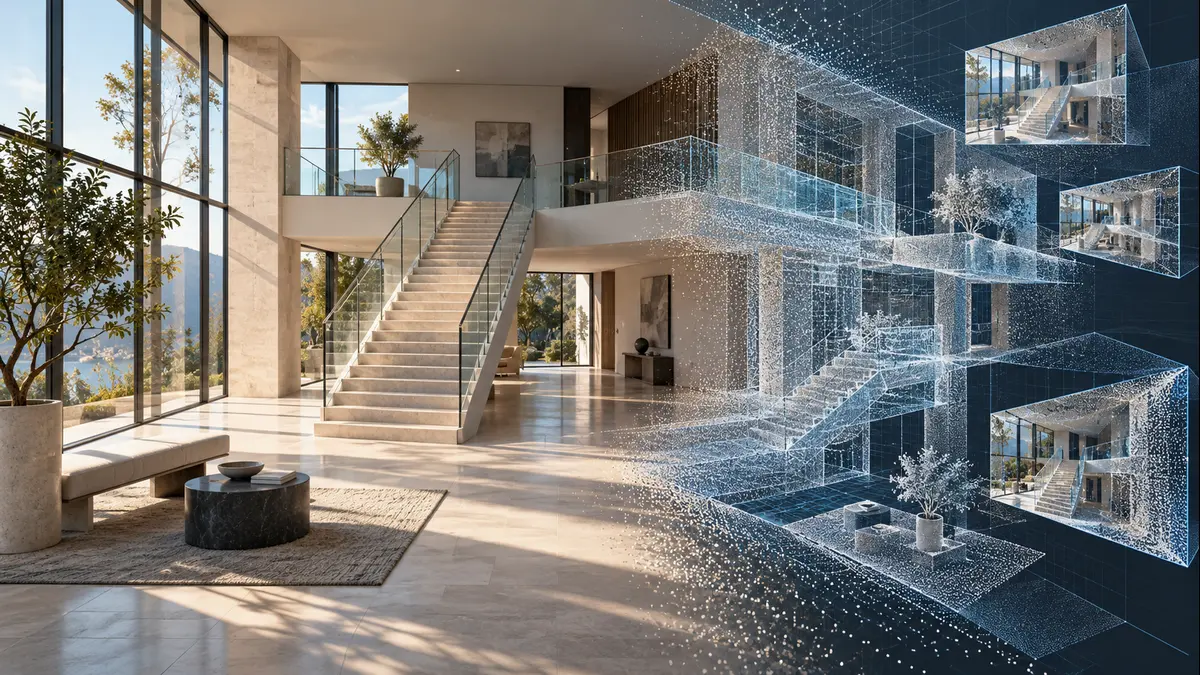
World Labs’ Atlas brings camera-controlled generation, 3D reconstruction, and simulation into one spatial AI model. Here’s how it works, where it could help robotics and creative teams, and what remains unproven while independent access is limited.
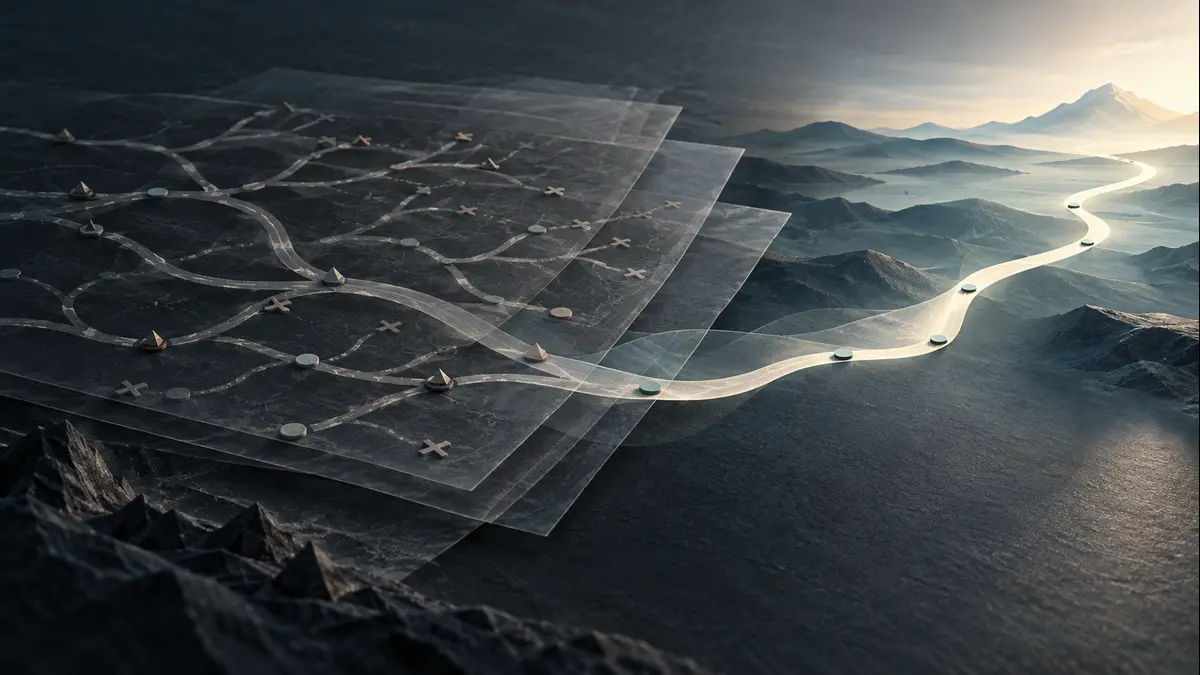
On September 1, 2026, World Labs introduced Atlas, a new world model built to generate, reconstruct, and simulate three-dimensional environments. While much of the AI industry remains focused on language models and agents, the company co-founded by Fei-Fei Li is pursuing a different question: what would it take for AI to understand a scene as a place, rather than as a collection of images?
That question connects Atlas to Li’s long-standing work in computer vision. ImageNet helped machines learn to recognize what appeared in an image. The company is now working on a harder challenge: building models that can maintain a coherent sense of space as the viewpoint changes, including when parts of a scene have never been shown to the model.
Atlas is an early research and product milestone, not a solved account of physical reality. Its significance lies in bringing several spatial tasks into one model-and in showing why the next stage of AI development may depend as much on understanding space as on generating language.
What Is World Labs Atlas?
Atlas is what World Labs calls an omni world model. It can work with text, images, video, camera positions, and three-dimensional information. From those inputs, it can generate new camera views, reconstruct a scene in 3D, or help create a simulated environment.
Consider a photograph of a room. A conventional image generator might produce another plausible picture of a similar room. Atlas is designed to answer a more constrained question: what would this room look like if the camera moved toward the doorway or turned to face the opposite wall?
There is an important limit to that ability. If the original image does not show what lies behind the camera, the model must infer or imagine it. A convincing result is not necessarily an exact record of the real space. World Labs says that supplying more images gives Atlas more evidence and reduces the amount it needs to invent.
How Atlas Uses Spatial Context
Large language models generate text one element at a time, using what came before as context. Atlas also works with sequences, but its context includes spatial information. Images and depth maps can be associated with explicit camera positions, allowing the model to relate different views to the same three-dimensional scene.
World Labs describes Atlas as a multimodal autoregressive diffusion transformer. Put simply, it combines sequence-based processing with diffusion-based image generation and takes camera positions as explicit inputs. Give it a camera path, and it can generate views along that path while aiming to preserve the scene’s layout.
In one demonstration, they showed a video lasting up to a minute at 1440p resolution, generated along a designed camera path. That is a company demonstration rather than a guarantee that every scene or movement will remain equally convincing for that duration. Still, it illustrates the control the company is trying to offer: a creator can direct where the camera goes instead of relying only on a written description of the desired shot.
One Model for Generation and 3D Reconstruction
Atlas is particularly interesting because it brings generation and reconstruction into the same system. Generation asks the model to create a scene or extend beyond what an input image reveals. Reconstruction asks it to recover a real scene as faithfully as the available evidence allows. Those goals can pull in different directions. A model may produce a beautiful unseen courtyard, for example, without having any proof that the courtyard exists.
The company says Atlas can produce useful reconstructions from as few as two or three images in some cases, while accepting many more images when greater fidelity is needed. It can also generate novel image views and contribute to explicit 3D outputs, including point clouds and Gaussian splats. These formats matter because a navigable 3D asset can be used in workflows that require more than a finished video.
In evaluations reported by them, Atlas performed better than selected specialist open-source models on sparse-view 3D reconstruction benchmarks. The company also reports strong results for camera-controlled generation. These are promising findings, but they remain company-reported results. Independent testing will be needed to establish how well Atlas performs across different scenes and production requirements.
How Atlas Fits Into the World Model Landscape
World Labs is part of a wider push toward AI systems that can represent and simulate environments. The approaches are related, though they do not all solve the same problem.
Google DeepMind’s Genie work emphasises real-time interaction with generated worlds. NVIDIA’s Cosmos platform targets world models and synthetic data for physical AI, alongside its broader robotics and simulation tools. Decart’s Oasis models focus on interactive generation, with newer work aimed at robotics workflows. Other companies, including Odyssey and Runway, are exploring world models for interactive media and additional applications.
Atlas stands out for its emphasis on camera-grounded views and its ability to combine scene generation, sparse-view reconstruction, and elements of simulation in one model. These capabilities serve different purposes from those of other world models and do not replace a dedicated physics simulator. Together, the approaches show how researchers are moving beyond isolated images and video clips toward more coherent representations of the world.
World Labs already has a product called Marble, which lets users create and edit persistent 3D worlds from inputs such as text, images, and video. The company says Atlas will power future versions of Marble and other products. For now, Atlas itself is entering early access with selected partners.
Why Spatial AI Matters for Robotics
Robotics makes the value of a reliable world model easier to see. A robot needs to respond to its surroundings as they change. Objects move, lighting varies, and the same surface can look different from a new angle. Gathering enough experience through physical trials is expensive and slow.
Atlas could help with part of that challenge. World Labs has demonstrated how it can reconstruct environments from captured imagery and generate the camera and depth views a robot might encounter while moving through them. Such capabilities could make it easier to build varied environments for training and evaluation.
The distinction between seeing and acting remains crucial. A visually convincing reconstruction does not, by itself, establish how an object will move when a robot pushes it, how a cable will bend, or whether a grasp will succeed. Useful robot training also requires task-relevant interactions and physical behaviour.
That is why World Labs’ acquisition of robotics simulation company SceniX matters. In separate real-to-sim-to-real work published before the Atlas announcement, World Labs reported robot policies trained entirely in simulation that transferred to physical robots for selected tasks. Some of its demonstrations showed autonomous operation for an hour. Those results come from the broader SceniX simulation effort; they should not be read as an Atlas-only achievement.
What Could Change for Creative Work?
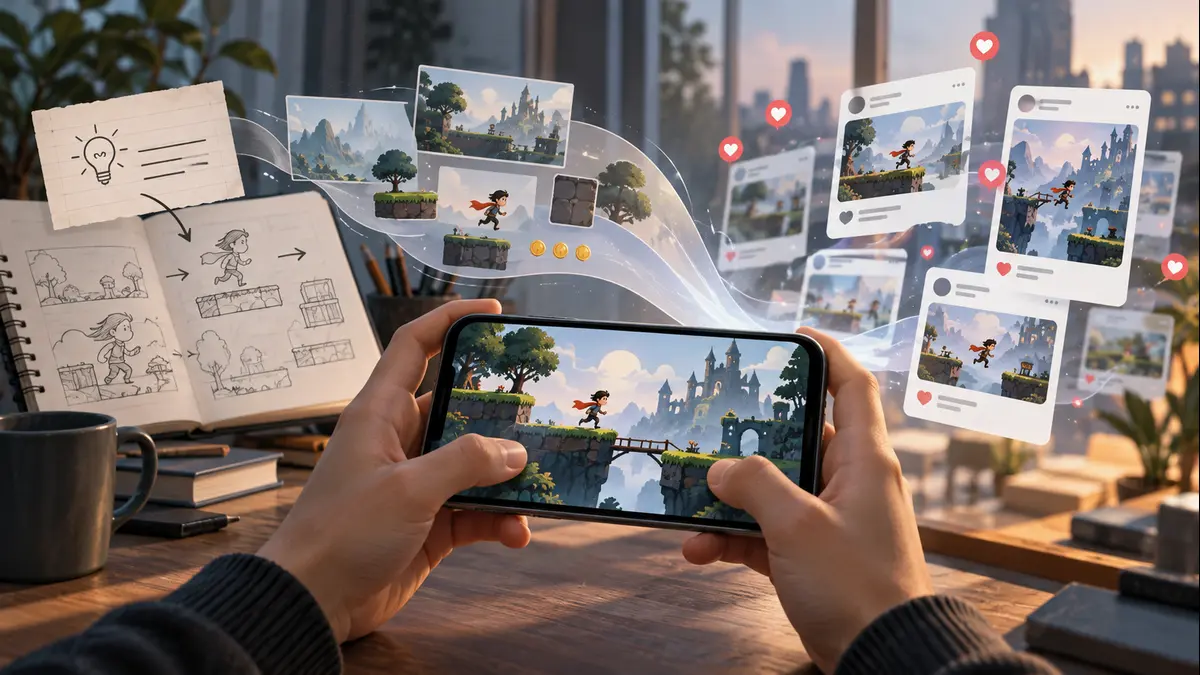
The nearer-term opportunities may be easier to picture in film, architecture, games, and design. Teams in these fields often need to capture a location, explore camera angles, or turn visual references into a navigable environment. A tool that reconstructs a useful scene from fewer photographs could make early exploration faster.
World Labs has also demonstrated video reframing from footage captured with a small number of ordinary cameras. That opens possibilities for visual effects, including new viewpoints and “bullet time” style shots without a large, specialized camera rig.
Whether the resulting assets meet production standards will depend on the job. An imagined wall may be perfectly acceptable for concept art and unacceptable for documenting an actual building. The useful question for each workflow is therefore not simply “Does it look real?” but “Which parts were observed, which were inferred, and how accurate must the result be?”
Atlas is still in early access, so outside researchers and production teams have limited opportunity to test its claims independently. The open questions go beyond image quality: how reliably does it preserve fine details across long camera paths? How does it handle unusual spaces, moving objects, and difficult physical interactions? How much captured evidence is needed when accuracy matters more than plausibility?
These questions define the gap between an impressive spatial demonstration and a dependable working tool. They also make Atlas worth watching. It offers a concrete way to test whether a model that connects images, camera positions, geometry, and time can support useful work across creative production and robotics.
The larger ambition is easy to understand. AI can already describe a room and generate a picture of one. Spatial intelligence asks it to keep track of that room as the camera moves, to distinguish what it has seen from what it has imagined, and eventually to support actions within it. Atlas brings that ambition closer to an engineering problem that can be demonstrated, measured, and challenged. Its place in the history of AI will depend on how well it holds up when more people can put it to work.
Discover more from Poniak Times
Subscribe to get the latest posts sent to your email.