As agentic AI moves into banks, enterprises, governments, and critical infrastructure, the Five Eyes guidance offers a practical framework for safe adoption, secure access, monitoring, and human oversight.
As organizations across the world begin experimenting with agentic AI, the security question is becoming impossible to ignore. Banks want AI agents that can assist with fraud monitoring, customer operations, compliance checks, and risk workflows. Enterprises want agents that can automate procurement, IT support, research, reporting, and internal decision support. Telecom companies, hospitals, manufacturers, insurers, and public sector agencies are also exploring AI systems that can monitor events, interpret data, and trigger actions.
But once an AI system can use tools, access databases, call APIs, read internal documents, update workflows, or make decisions with limited human input, it is no longer just a productivity feature. It becomes an active participant inside the organization’s digital environment.
That is why the Five Eyes alliance’s joint guidance, “Careful Adoption of Agentic AI Services,” matters far beyond government and defense circles. Published by cybersecurity agencies from Australia, Canada, New Zealand, the United Kingdom, and the United States, the guidance is intended for organizations considering the development or deployment of agentic AI systems. It outlines security risks, operational concerns, and best practices for designing, deploying, and operating these systems safely.
The message is not anti-innovation. It is more mature than that. The guidance essentially says: adopt agentic AI, but do not treat autonomy as harmless. Move forward, but build controls before scaling. Experiment, but do not confuse a successful demo with a production-ready system.
Agentic AI Is Not Just Another Chatbot
For the last few years, most organizations have understood artificial intelligence through chatbots and generative AI tools. A chatbot responds to a prompt. It may summarize a document, draft an email, generate code, or answer a question. The interaction is usually bounded. A person asks, the system replies, and the user decides what to do next.
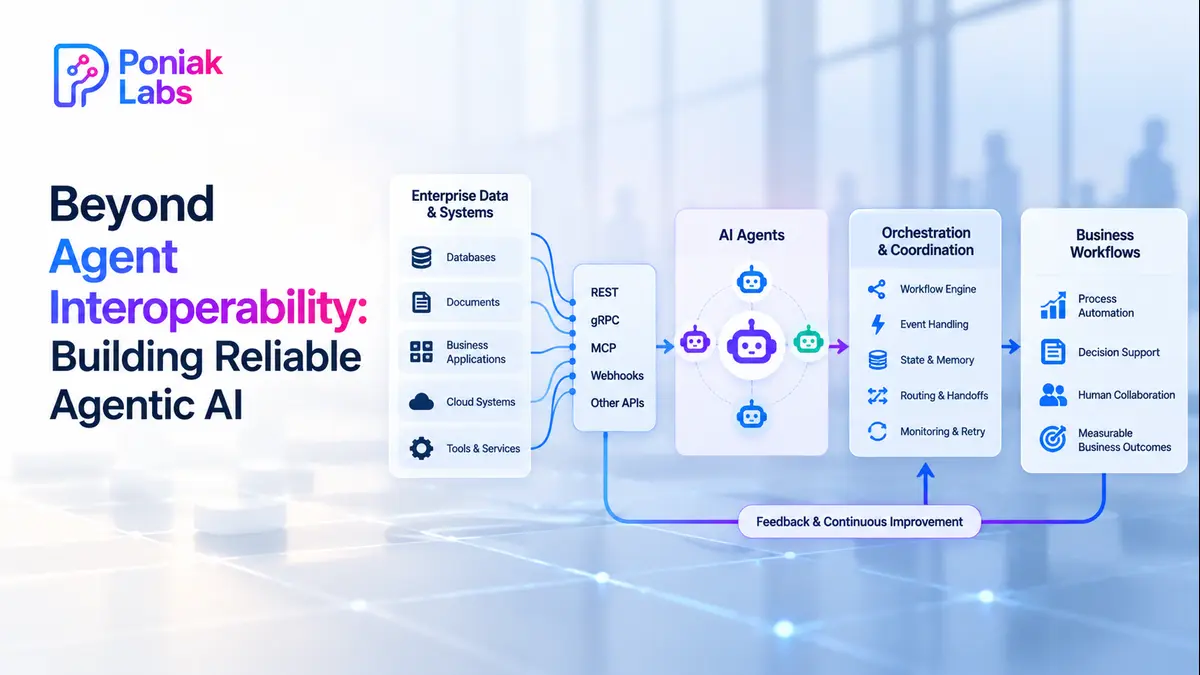
Agentic AI changes this pattern. An agentic AI system can break down a goal into steps, select tools, interact with external systems, use memory, retrieve context, and execute actions. It may open a ticket, send a message, update a record, trigger a workflow, run a query, or coordinate with another software service. Some systems can even create sub-agents to handle smaller tasks within a larger objective. That capability is both powerful and risky
The moment an AI system gains the ability to act, the security model changes. The organization is no longer only protecting data from users and applications. It must also govern what an autonomous software system is allowed to see, decide, and do. In traditional enterprise systems, permissions are assigned to employees, applications, and service accounts. With agentic AI, the agent itself becomes a new kind of digital principal.
This is the heart of the Five Eyes warning. Agentic AI expands the attack surface because it connects language models to tools, data stores, permissions, workflows, and operational systems. The guidance notes that agentic AI can support repetitive, well-defined, and low-risk tasks, but it can also be misused or misappropriated in ways that lead to productivity loss, service disruption, privacy breaches, or cybersecurity incidents.
Why Banks and Financial Institutions Should Pay Attention
Banks are among the most obvious candidates for agentic AI adoption. They handle large volumes of repetitive work, structured data, customer interactions, compliance obligations, transaction monitoring, and risk assessment. On paper, this looks ideal for AI agents.
An internal agent could help analysts review suspicious transactions. Another could assist relationship managers by summarizing customer histories. A compliance agent could monitor policy changes and map them against internal processes. In wealth management, agents could help prepare research briefs. In operations, they could support reconciliation, exception handling, or document review. But banking is also one of the least forgiving environments for uncontrolled autonomy.
A poorly governed AI agent with access to customer records, payment systems, loan workflows, or internal risk models could create serious exposure. Even if it does not act maliciously, it may misunderstand context, follow a manipulated instruction, leak sensitive information, or perform an action outside its intended scope. In financial services, the cost of such failure is not only technical. It can become regulatory, reputational, and legal.
For banks, the real question is not whether agentic AI should be adopted. The real question is where it should be allowed to act, what it should never be allowed to do, and who remains accountable when something goes wrong.
This is where the Five Eyes guidance becomes useful. It gives financial institutions a practical lens: start with low-risk use cases, define narrow permissions, enforce human approval for sensitive actions, monitor agent behavior, and treat every AI agent as a system that requires identity, access control, logging, and auditability.
The Privilege Problem: When Helpful Agents Get Too Much Access
One of the most important risks in agentic AI security is privilege. To be useful, agents need access. They may need to read files, query databases, search internal knowledge bases, connect with SaaS tools, or call APIs. The temptation is to give them broad permissions so they can complete more tasks smoothly.
That is exactly where danger begins. If an agent has excessive access, a single compromise can become a system-wide incident. Attackers may not need to breach every database directly. They may only need to manipulate the agent into doing something on their behalf. This is often discussed through the idea of a “confused deputy” problem, where a trusted system is tricked into performing an unauthorized action.
For example, an agent connected to procurement tools could be manipulated into approving an unusual vendor request. An IT support agent could be prompted into resetting access incorrectly. A research agent with access to internal documents might summarize confidential material into an external channel. A customer service agent could expose personal data if its retrieval and response boundaries are weak. The lesson is old, but still powerful: least privilege matters.
Recent examples make this concern more concrete. Anthropic’s Claude Mythos Preview, launched under Project Glasswing, has shown how advanced AI systems can identify large numbers of previously unknown software vulnerabilities, proving how quickly agentic AI can change the tempo of cybersecurity work. Separately, the reported PocketOS incident, where a Claude-powered Cursor agent allegedly deleted a production database and backups in nine seconds, shows why agent permissions, confirmation gates, and resilient backups cannot be treated casually.
Organizations should not give AI agents broad access “just in case.” Each agent should have a narrow role, specific permissions, unique credentials, and clear operational boundaries. If an agent only needs to read a limited dataset, it should not have write access. If it only needs to draft a recommendation, it should not be able to execute the final action. If it supports a high-risk workflow, a human approval gate should be mandatory. In enterprise security, old principles often survive because they are true. Agentic AI does not remove the need for least privilege. It makes least privilege more important.
Prompt Injection and the New Shape of Cyber Risk
Agentic AI introduces a subtle but serious threat: indirect prompt injection. In a normal chatbot setting, the user gives the prompt directly. In an agentic system, the AI may read emails, websites, documents, tickets, PDFs, support logs, spreadsheets, or messages. Any of these external inputs can contain malicious instructions.
An attacker may hide instructions inside a webpage, document, or data field. The agent reads it as part of its task and may treat the instruction as legitimate. If the agent has access to tools, the impact can move beyond a bad answer. It could send data, change settings, call APIs, or take actions the original user never intended.
This is why organizations cannot secure agentic AI only at the model level. The entire workflow matters. Inputs must be validated. Tools must be restricted. Outputs must be checked. Sensitive actions must require confirmation. Logs must show what the agent saw, what it decided, and what it did.
For banks, insurers, hospitals, and large enterprises, this means agentic AI security must be embedded into the architecture from day one. It cannot be added casually after deployment.
Why Critical Infrastructure Needs Extra Caution
The Five Eyes guidance is especially relevant to critical infrastructure. Energy grids, telecom networks, transport systems, water utilities, healthcare infrastructure, and defense environments are increasingly digital. Many of these sectors already use automation, monitoring tools, and decision-support systems. Agentic AI may look like the next natural upgrade.
The benefits are real. Agents could help detect anomalies, summarize incidents, coordinate maintenance, analyze logs, or support response teams during outages. They could reduce manual workload and improve situational awareness.
Yet the downside is equally serious. If an agent misreads a signal, acts too quickly, or follows a manipulated instruction, the consequences may move from software into the physical world. A bad decision in a regular office workflow may cause delay or confusion. A bad decision in a critical infrastructure workflow can affect public safety, service continuity, and national resilience.
That is why the guidance emphasizes careful deployment, layered defense, strict access controls, secure design, and ongoing monitoring. The point is not to reject AI. The point is to prevent fragile AI systems from becoming deeply embedded in essential services before their failure modes are properly understood.
What Enterprises Should Do Before Deploying Agentic AI
The practical value of the Five Eyes guidance is that it pushes organizations toward disciplined adoption. Enterprises do not need to wait until every AI standard is perfect. But they do need a structured approach.
The first step is use-case classification. Not every workflow deserves an autonomous agent. Some tasks can be handled with traditional automation, rule-based systems, dashboards, scripts, or simple approval workflows. Agentic AI should be used where reasoning, context handling, and multi-step execution genuinely add value.
The second step is risk ranking. A low-risk agent that summarizes public market news is very different from an agent that can update customer records or trigger payments. Organizations should classify agentic AI use cases based on data sensitivity, action authority, business impact, regulatory exposure, and reversibility.
The third step is identity and access management. Each agent should have its own identity. Shared credentials are dangerous. So are vague permissions. Security teams should know which agent accessed which system, when it acted, and under what instruction.
The fourth step is sandboxing. Before an agent touches production systems, it should be tested in a controlled environment. This allows teams to observe behavior, detect failure modes, and refine guardrails. A sandbox is not a luxury. For agentic AI, it is basic hygiene.
The fifth step is human oversight. High-impact actions should require approval. This is especially important in finance, healthcare, legal, infrastructure, HR, and cybersecurity workflows. Human-in-the-loop design may feel slower, but in serious environments it is often the difference between automation and recklessness.
The sixth step is logging and auditability. Every important agent action should be traceable. Organizations should be able to answer simple questions: What did the agent see? Which tools did it use? What data did it retrieve? What action did it take? Was there human approval? Could the action be reversed?
Governance Is Not a Speed Breaker
Some technology teams may worry that governance will slow adoption. That concern is understandable. AI competition is intense, and enterprises do not want to fall behind. But weak governance does not create speed. It creates hidden debt.
The history of enterprise technology teaches the same lesson again and again. Cloud adoption became serious only when security, compliance, and architecture matured. APIs scaled when identity and access controls improved. Digital payments expanded because trust, auditability, and regulation grew around them. The same pattern will apply to agentic AI.
Organizations that build governance early will move faster later. They will know which use cases are safe to scale, which ones need controls, and which ones should not be automated at all. Those that rush without structure may face incidents that slow them down far more than careful planning ever would.
Agentic AI governance should include business leaders, security teams, legal teams, risk officers, compliance teams, product owners, and engineering teams. This cannot remain only an innovation lab activity. Once an agent touches real systems, it becomes an enterprise risk matter.
The Larger Message: Adoption With Discipline
The Five Eyes guidance should be read as a global enterprise signal. Agentic AI is moving from demos into production. That shift demands a different mindset. The question is no longer only whether an AI model can produce impressive answers. The question is whether an AI system can act safely inside a real organization.
For banks, the focus should be controlled autonomy. For enterprises, it should be secure workflow integration. For governments, it should be public accountability and resilience. For critical infrastructure, it should be safety, containment, and reversibility.
The most successful organizations will not be the ones that blindly automate everything. They will be the ones that understand where autonomy creates value and where human judgment must remain central.
Agentic AI will almost certainly become part of modern enterprise operations. It may reshape customer service, compliance, IT operations, research, cybersecurity, procurement, and decision support. But its long-term success will depend on trust. And trust is not built through speed alone. It is built through security, accountability, discipline, and careful design.
The Five Eyes guidance is therefore more than a warning. It is a practical framework for the next phase of enterprise AI adoption. It reminds organizations that autonomy without control is not intelligence. It is exposure.
Careful adoption may feel slower in the beginning. But for banks, enterprises, governments, and infrastructure operators, it is the path that leads to durable and trustworthy AI. In the agentic era, the winners will not simply be those who deploy first. They will be those who deploy wisely.
Discover more from Poniak Times
Subscribe to get the latest posts sent to your email.