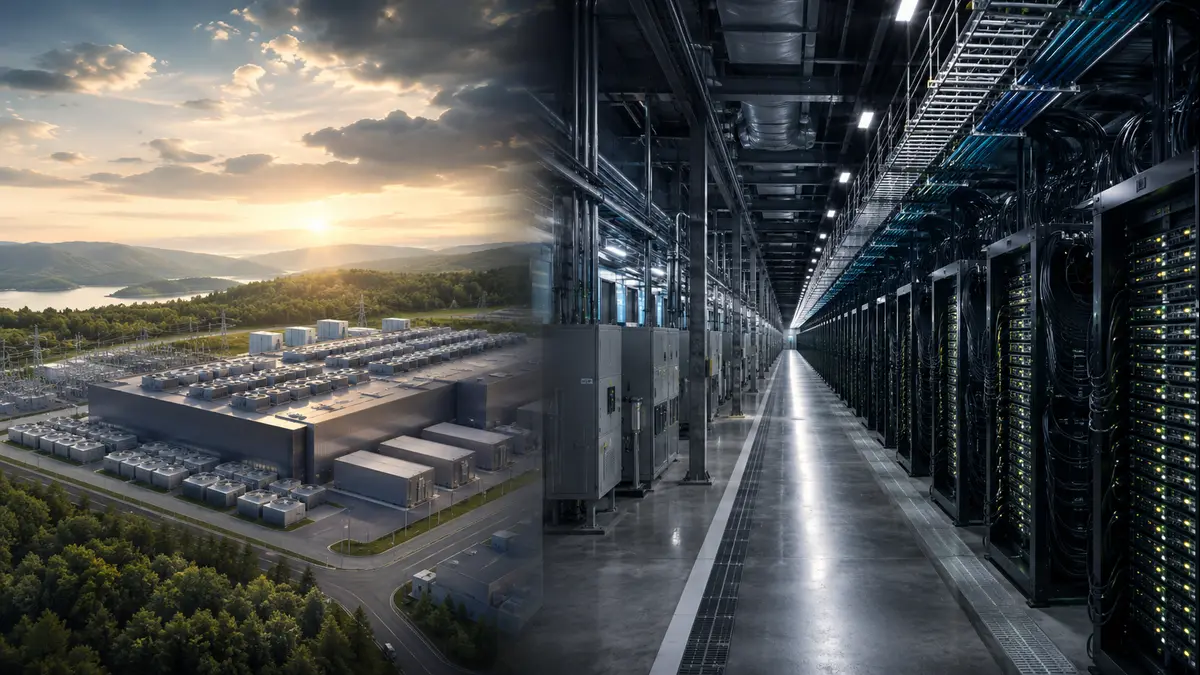
NVIDIA’s partnership with IREN shows that the AI race is moving beyond chips and models. The next major battleground is AI data centers, where power, land, cooling and large-scale compute capacity will decide who can serve the next generation of artificial intelligence.
Artificial intelligence is slowly transitioning toward an infrastructure race.
For the past two years, much of the public conversation around AI has focused on models, chips and applications. Companies competed on whose model was smarter, whose chatbot was faster and whose GPU allocation was larger. But the NVIDIA–IREN partnership signals something deeper: the next phase of AI competition may be decided by power access, land availability, cooling capacity and the ability to build data centers at industrial scale.
On May 7, 2026, IREN announced a major AI infrastructure partnership with NVIDIA that includes a five-year, $3.4 billion AI Cloud contract and a broader plan to support up to 5GW of NVIDIA-aligned AI infrastructure across IREN’s global data center pipeline. As part of the partnership, NVIDIA also received a five-year right to purchase up to 30 million IREN ordinary shares at $70 per share, representing a potential investment of up to $2.1 billion, subject to conditions including regulatory limitations.
This is not just another large technology deal. It is a signal that AI infrastructure is moving from experimental expansion to industrial-scale deployment.
For NVIDIA, the agreement strengthens access to large-scale compute infrastructure at a time when demand for AI capacity continues to rise. For IREN, it provides validation from the most important company in the AI hardware ecosystem. For the broader market, it confirms a simple but important reality: the future of AI will not be shaped by algorithms alone. It will also be shaped by who can deliver compute reliably, efficiently and at massive scale.
The Deal Is Bigger Than a GPU Supply Arrangement
At first glance, the headline numbers are enough to draw attention. A $3.4 billion AI Cloud contract. A possible $2.1 billion equity-linked investment. A 5GW strategic infrastructure partnership. These numbers are large even by the standards of the current AI boom.
But the structure of the deal is more important than the numbers alone.
IREN said the $3.4 billion contract is a five-year agreement for air-cooled Blackwell GPUs, with deployment planned within around 60MW of existing data centers at its Childress campus in Texas. The company is targeting a ramp from early 2027.
That matters because AI companies are not only searching for chips. They are searching for delivered capacity. A GPU has limited economic value unless it sits inside a working data center with enough power, networking, cooling, storage, software and operational support around it.
This is where the industry is changing. The bottleneck is no longer only semiconductor manufacturing. It is also data center execution.
NVIDIA’s role in the partnership shows how the company is expanding its influence beyond selling chips. It is helping shape the infrastructure layer where those chips are deployed. IREN’s role shows how data center operators with power access and large sites can become strategically important in the AI economy.
IREN’s Transformation From Bitcoin Mining to AI Cloud
IREN’s rise is particularly interesting because the company did not begin as a traditional enterprise cloud provider. It was originally known for operating large-scale data center infrastructure linked to Bitcoin mining. That background now gives it a different kind of advantage.
Bitcoin mining required large amounts of power, disciplined site operations and the ability to run compute-heavy facilities. AI infrastructure requires a more sophisticated version of that same operational muscle: high-density compute, stronger networking, better cooling, higher uptime expectations and enterprise-grade customer delivery.
IREN has been repositioning itself around this opportunity. In its Q3 FY26 update, the company said its results reflected continued progress in the transition from Bitcoin mining to AI Cloud. Revenue declined to $144.8 million from $184.7 million in the previous quarter, while the company reported a net loss of $247.8 million. IREN attributed part of the revenue decline to lower average Bitcoin prices and the decommissioning of mining hardware ahead of GPU installation and billing.
That transition is not painless. Moving from mining infrastructure to AI cloud infrastructure requires capital, technical upgrades, customer contracts and execution discipline. But if done correctly, the reward can be significant. AI cloud contracts can create longer-term revenue visibility compared with the more volatile economics of crypto mining.
IREN’s management framed the opportunity directly. Co-founder and Co-CEO Daniel Roberts said the world is “structurally short compute” and that the bottleneck is delivered data center and GPU capacity. He also pointed to IREN’s strengths in securing power, developing land, building data centers and bringing compute online at scale.
That sentence captures the real story. The AI industry does not only need more intelligence. It needs more places to run that intelligence.
Why the Microsoft Deal Matters in the Background
The NVIDIA partnership does not stand alone. It builds on IREN’s earlier momentum with Microsoft.
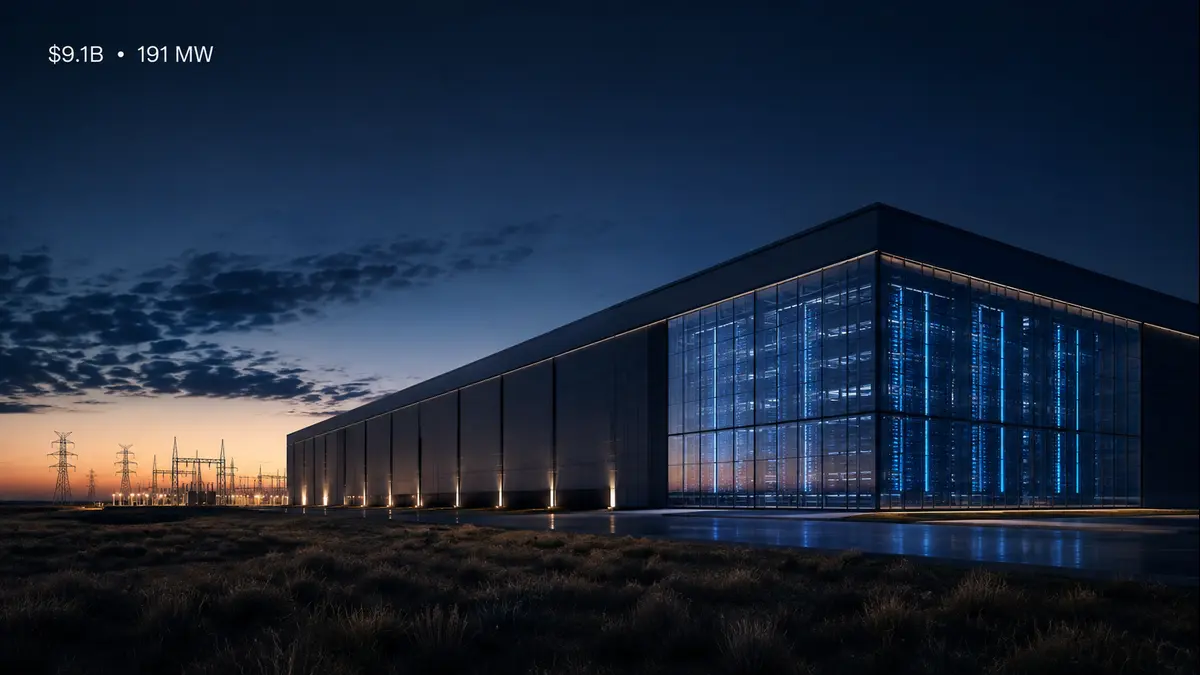
In November 2025, IREN announced a multi-year GPU cloud services contract with Microsoft valued at approximately $9.7 billion. Under that agreement, IREN said it would provide Microsoft with access to NVIDIA GB300 GPUs over a five-year term, including a 20% prepayment. The GPUs were expected to be deployed in phases through 2026 at IREN’s 750MW Childress, Texas campus, supported by new liquid-cooled data centers with 200MW of critical IT load.
This is important because it shows that IREN is not simply talking about AI infrastructure. It is already signing large-scale customers.
Microsoft’s deal gave IREN credibility with one of the world’s largest cloud and AI players. NVIDIA’s partnership adds another layer of validation from the company that sits at the center of the AI hardware ecosystem.
Together, these agreements suggest that IREN is trying to position itself as a serious AI infrastructure provider, not just a converted mining operator. That is a meaningful shift.
The Rise of the AI Factory
NVIDIA has repeatedly used the term “AI factory” to describe the next generation of compute infrastructure. The term is useful because it changes how people think about data centers.
A traditional data center stores, processes and serves information. An AI factory produces intelligence at scale. It takes in data, runs massive compute workloads and generates outputs that power AI models, enterprise applications, copilots, agents and automation systems.
This requires a different architecture. AI workloads demand extremely dense GPU clusters, high-speed networking, specialized cooling systems, reliable power delivery and optimized software stacks. Small inefficiencies at this scale can become very expensive.
That is why partnerships like NVIDIA and IREN matter. AI factories cannot be built by hardware alone. They require coordination between chipmakers, cloud operators, data center developers, energy providers, cooling specialists and enterprise customers.
The old cloud model was built around general-purpose computing. The new AI infrastructure model is being built around accelerated computing.
That distinction is critical. General-purpose cloud infrastructure supports many workloads. AI factories are designed specifically for training, inference and advanced AI workloads. They are closer to industrial plants than ordinary server rooms.
The Real Bottleneck Is Shifting
For years, the AI discussion was dominated by model size and GPU supply. Those remain important, but the bottleneck is expanding.
Even if a company has access to GPUs, it still needs electricity. It needs grid interconnection. It needs land. It needs permits. It needs cooling systems. It needs transformers. It needs construction timelines that actually hold. It needs operations teams that can keep expensive GPU clusters running with high utilization.
This is where AI infrastructure becomes a hard, physical business.
Software can scale quickly when the product is ready. Data centers cannot. They require capital, time, regulation, energy planning and execution. A model can be updated overnight. A gigawatt-scale data center campus cannot be built overnight.
This creates a new competitive layer in AI. The winners will not only be companies with the best models. They will also be companies with reliable access to compute capacity.
Reuters reported that IREN shares rose around 9% in extended trading after the announcement, and noted that future deployments were expected to focus on IREN’s 2GW Sweetwater campus in Texas. Reuters also described IREN as a “neocloud,” referring to firms that sell cloud computing services built on NVIDIA processors.
The word “neocloud” is becoming more relevant. These companies sit between hyperscalers and specialized infrastructure providers. They give AI companies access to GPU capacity without requiring them to build every data center themselves.
The Opportunity Is Large, but Execution Risk Is Real
The bullish case is clear. Demand for AI compute is rising. Enterprises are adopting AI more seriously. Frontier model companies need enormous GPU clusters. Hyperscalers want capacity quickly. Startups want alternatives to traditional cloud providers. Governments are also beginning to treat AI infrastructure as a strategic asset.
In that environment, a company with large power access, suitable land and strong infrastructure execution can become highly valuable.
But the risks are equally important.
Gigawatt-scale infrastructure is difficult. Power projects can be delayed. Grid approvals can take longer than expected. Cooling designs must perform under pressure. GPU deployments are capital intensive. Customer expectations are high. If utilization is weak, economics can deteriorate. If financing becomes expensive, expansion plans can slow.
IREN’s Q3 update itself shows the complexity of transition. The company is still managing the financial impact of moving away from parts of its Bitcoin mining base while investing heavily into AI infrastructure.
There is also a broader market question. Some investors may ask whether large AI infrastructure deals are creating genuine long-term demand or whether parts of the ecosystem are becoming too circular, with chipmakers, cloud providers and infrastructure players increasingly financing each other’s growth.
That concern should not be ignored. The AI infrastructure boom is real, but every boom eventually separates disciplined builders from overextended operators.
What This Means for the AI Industry
The NVIDIA–IREN deal is important because it shows where AI competition is heading next.
The first phase of the AI boom was about models. The second phase was about applications. The third phase is increasingly about infrastructure.
Companies building AI products will need more than clever software. They will need dependable compute access. Enterprises adopting AI will care about cost, latency, reliability, security and availability. Governments will care about sovereign infrastructure. Investors will care about whether AI demand can translate into durable cash flows.
This is why the data center layer is becoming strategic.
If AI becomes a core part of business operations, healthcare, financial services, manufacturing, defense, education and consumer software, then compute infrastructure becomes as important as roads, ports, power plants and telecom networks were in earlier industrial cycles.
In that sense, AI factories are not just technology assets. They are economic infrastructure.
NVIDIA understands this. IREN is trying to build for it. Microsoft has already signed up for it. The rest of the market is watching closely.
A Defining Infrastructure Moment for AI
The NVIDIA–IREN partnership is not just a deal between a chip leader and a data center operator. It is a marker of where the AI economy is moving.
The industry is learning that intelligence at scale requires infrastructure at scale. Models may capture the imagination, but power, land, cooling and execution will decide how much of that imagination becomes reality.
For IREN, the opportunity is to prove that a company born in the energy-intensive world of Bitcoin mining can become a serious AI cloud infrastructure platform. For NVIDIA, the opportunity is to ensure that its chips are not constrained by the physical limits of data center supply. For the broader industry, the message is simple: the AI race is entering its industrial phase.
The next great AI companies may not only be the ones that build the smartest models. They may also be the ones that control the infrastructure on which those models run.
And in that world, data centers are no longer behind-the-scenes assets. They are becoming the factories of the AI economy.
Discover more from Poniak Times
Subscribe to get the latest posts sent to your email.